Boston Top Asphalt Paving: Asphalt Driveway Replacement & Resurfacing
#1 Paving Contractor in Boston, MA
Boston Top Asphalt Paving has 28 years of experience in commercial and residential paving. We pave driveways, parking lots, and private roads across the city from Beacon Hill to Dorchester, Brookline to East Boston. Real crews. Real warranties. No subcontracted shortcuts.
Boston is hard on pavement. Freezing nights, road salt, snowplow scrapes, hot July sun, and three-decker driveways that never seem to drain right. A lot of paving companies install the same mix they'd use elsewhere.
Get a FREE Quote
We have established ourselves as a premier paving contractor through decades of experience navigating the city's unique challenges. Our expertise extends from downtown commercial districts to waterfront properties, where we understand how salt air exposure and coastal storm surges affect pavement longevity.
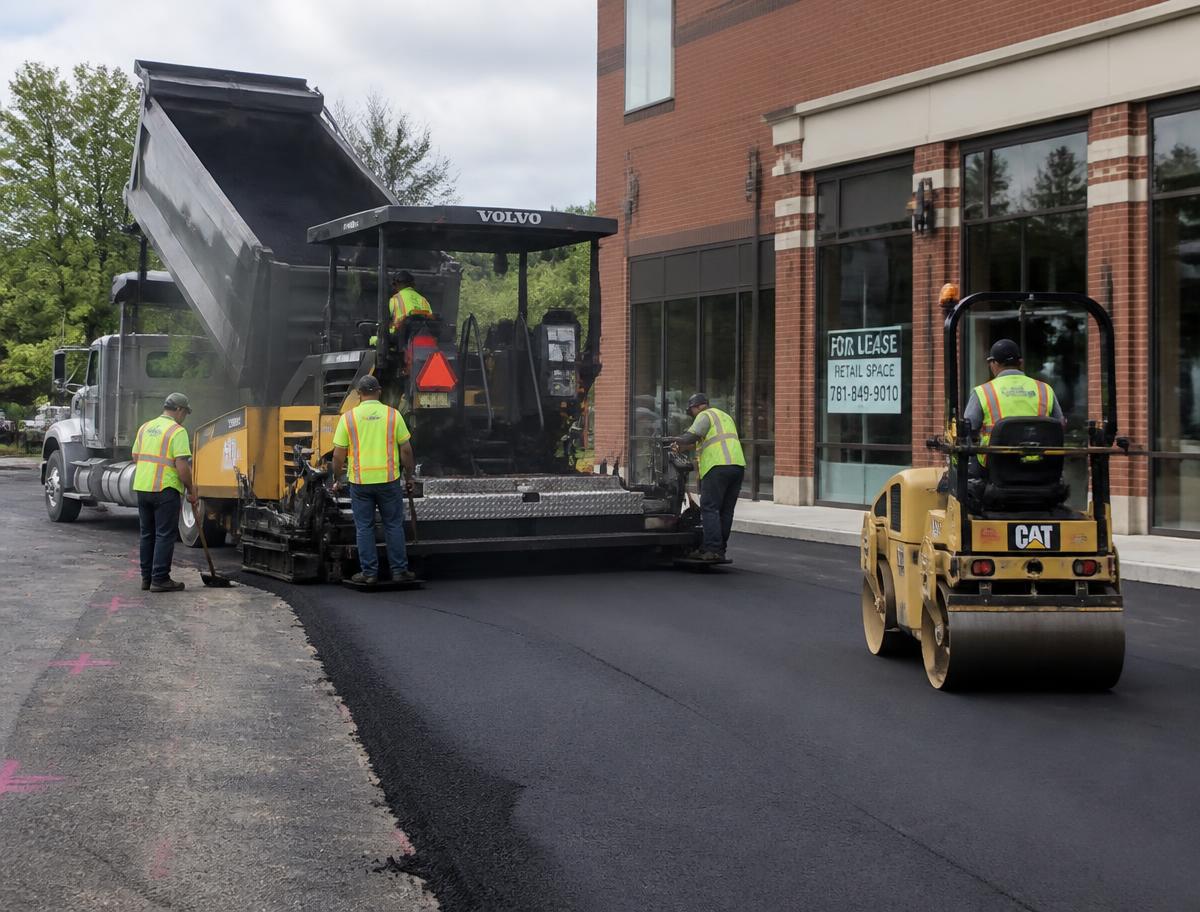
Our recent completion of the 80,000-square-foot Maliotis Cultural Center project demonstrates our capability to handle large-scale commercial developments. We paved the entire property and constructed the front patio and central steps, delivering seamless integration from parking areas to building entrances.

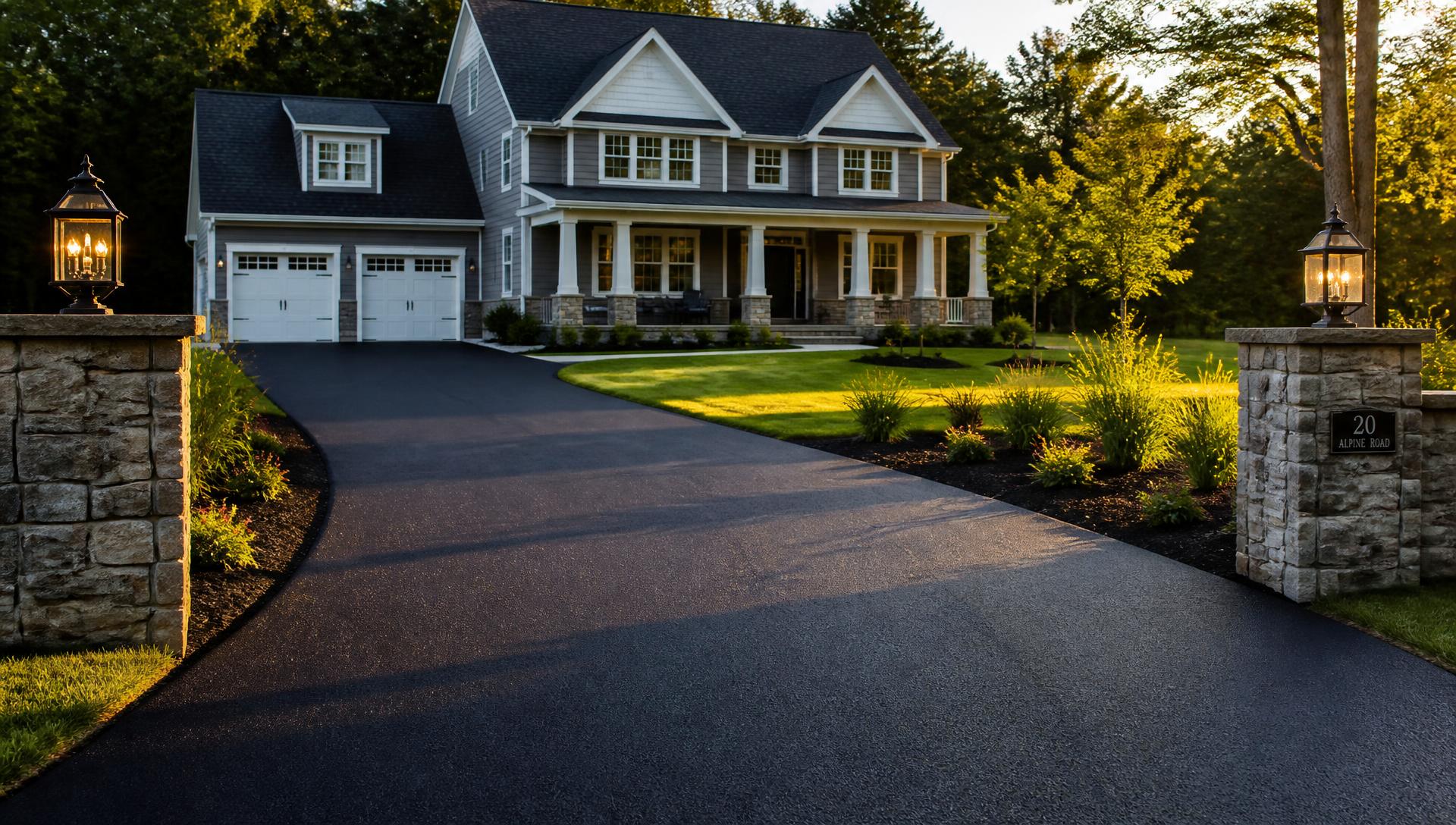
New driveways and full replacements for single-families, two-families, and triple-deckers. We dig out the old surface, fix the base, and lay fresh hot-mix that drains away from your house not toward the basement.
Whether it's a long Brookline driveway with a stone wall on one side or a tight Southie driveway between two houses, we figure out the angles before the truck arrives.
Popular in: Brookline, Newton, JP, West Roxbury, Dorchester

Parking lots for offices, apartment buildings, churches, restaurants, and retail. We handle new builds, full repaves, mill-and-overlays, and ADA compliance work. Striping and bumper installs included.
We schedule around your business hours. Most lots can be paved over a weekend so you open Monday on a fresh surface.
Popular in: Allston, Seaport, Quincy, Cambridge, Somerville

Think of sealcoating like sunscreen for your driveway. It blocks UV, gas, oil, and salt from eating into the asphalt. Most driveways need it every 2–3 years to stretch their life out by a decade or more.
We use commercial-grade coal tar or asphalt-based sealer depending on your surface and your town's rules some Massachusetts towns regulate which product can be used.
Best done: Late spring through early fall

Cracks are how water gets in. Once water freezes underneath your driveway, it lifts and cracks the surface from below. We hot-pour rubberized crack filler that flexes with the pavement instead of popping out by February.
For potholes, we cut clean edges, prime the hole, and pack hot-mix in lifts. Done right, they stay fixed.
Most-needed: After every Boston winter

If your driveway base is solid but the top is worn, alligator-cracked, or faded, you may not need a full tear-out. We mill the surface down a couple of inches and overlay it with fresh asphalt. Saves 30–50% versus a full replacement.
This isn't always the right call we'll tell you honestly if your sub-base is too far gone.
Good fit: Driveways 12–20 years old

Boston has a lot of private ways and shared driveways — common in places like Charlestown, the North End, and parts of Cambridge. We coordinate with HOAs and multiple owners, handle drainage between properties, and stage equipment so neighbors stay parked.
We'll also draft a fair cost-share breakdown if your neighbors haven't agreed on splits yet.
Popular in: Charlestown, Beacon Hill, Cambridgeport
We come out, measure, look at drainage, check your sub-base if visible, and ask what you're hoping for. Then we write a real estimate itemized, not a one-line guess. If a repair makes more sense than a replacement, we'll tell you.
The old surface comes up. We haul it away (most of it gets recycled). We dig down to the right depth typically 10–14 inches for a driveway, more for a parking lot — and inspect the soil underneath.
We bring in crushed stone, spread it, grade it for proper drainage, and run a vibratory roller across it until it's tight. This is the step bad pavers cut corners on. We don't.
Hot-mix arrives in insulated trucks at 300°F+. We lay it in lifts usually a 2-inch binder course followed by a 1.5-inch top course. Hand-work the edges. Roll it smooth with a steel-drum roller while it's still hot.
Once it's down, we walk the job with you. Show you what to watch for during the cure. Hand you a written care sheet with do's and don'ts for the first 30 days. Then we follow up at 6 months to see how it's holding up.
Boston paving runs a little higher than the national average — labor costs, dump fees, and parking permits all add up. These are honest 2026 ranges. Your final number depends on size, access, and prep work needed.
What can change the price: Tear-out of old surface, drainage work, retaining walls, tight access (we charge less when a paver fits straight in), and city permits. We break all of this out clearly in your written estimate so there are no surprise add-ons.
Request a quote to get an accurate estimate on your next paving project.
Asphalt Paving Type | Typical Cost Range |
|---|---|
New Residential Driveway | Average Boston Driveway: $4,500 – $9,000 |
Driveway Resurfacing / Overlay | $3 – $5 per sq. ft. |
Sealcoating | Most Driveways: $200 – $500 |
Pothole Repair | $150 – $400 per hole |
Striping (per stall) | $8 – $15 per stall |
Commercial Parking Lot Paving | Volume pricing on lots over 10,000 sq. ft. |
Mid-May through mid-October is the sweet spot. Asphalt needs ground temperatures above about 50°F to bond properly. We can sometimes pave in early spring or late fall if the forecast cooperates, but we won't lay hot-mix in freezing weather just to keep the schedule moving it'll fail. If you're calling in November or March, we'll be straight with you about whether to wait.
A properly built driveway with regular sealcoating lasts 20 to 30 years. Without maintenance, you're looking at 10 to 15. Our climate is rough freeze-thaw cycles, road salt tracked in on tires, and tree roots all shorten the life of asphalt. The single biggest factor isn't the asphalt itself, it's the sub-base underneath. Cheap installs skip that step and fail early.
For most residential driveways on existing footprints, no. If you're expanding the driveway, changing the curb cut, or doing commercial work, yes. We pull permits as part of the job when needed and handle the city paperwork. Some neighboring towns like Brookline, Newton, and Cambridge have their own rules we know each town's process.
Foot traffic is fine after about 12 hours. Light vehicle use after 48 to 72 hours. For the first 30 days, avoid parking in the same spot every day, sharp turns from a dead stop, and heavy loads like dumpsters. Asphalt looks hard right away but it's still curing for weeks. Hot summer days are the riskiest soft asphalt scuffs easily under tires.
If your driveway is structurally solid and just looking faded, gray, or has a few small cracks, sealcoating is the right call. If you've got alligator cracking, potholes, standing water, or sections that have heaved or sunk, sealcoat won't fix those problems you need repair or replacement. We'll come look for free and tell you honestly which one you need. We won't sell you a repave when a $400 sealcoat would do the job.